
DIY or bust. The Greek voice assistant saga.
The day I discovered that Greek was supported by Whisper and Piper I started experimenting with local voice. It was all fine and dandy, except the fact that I use power frugal hardware and the process felt slow and sometimes noisy (fans spinning). That's where the Nabu Casa subscription came in.

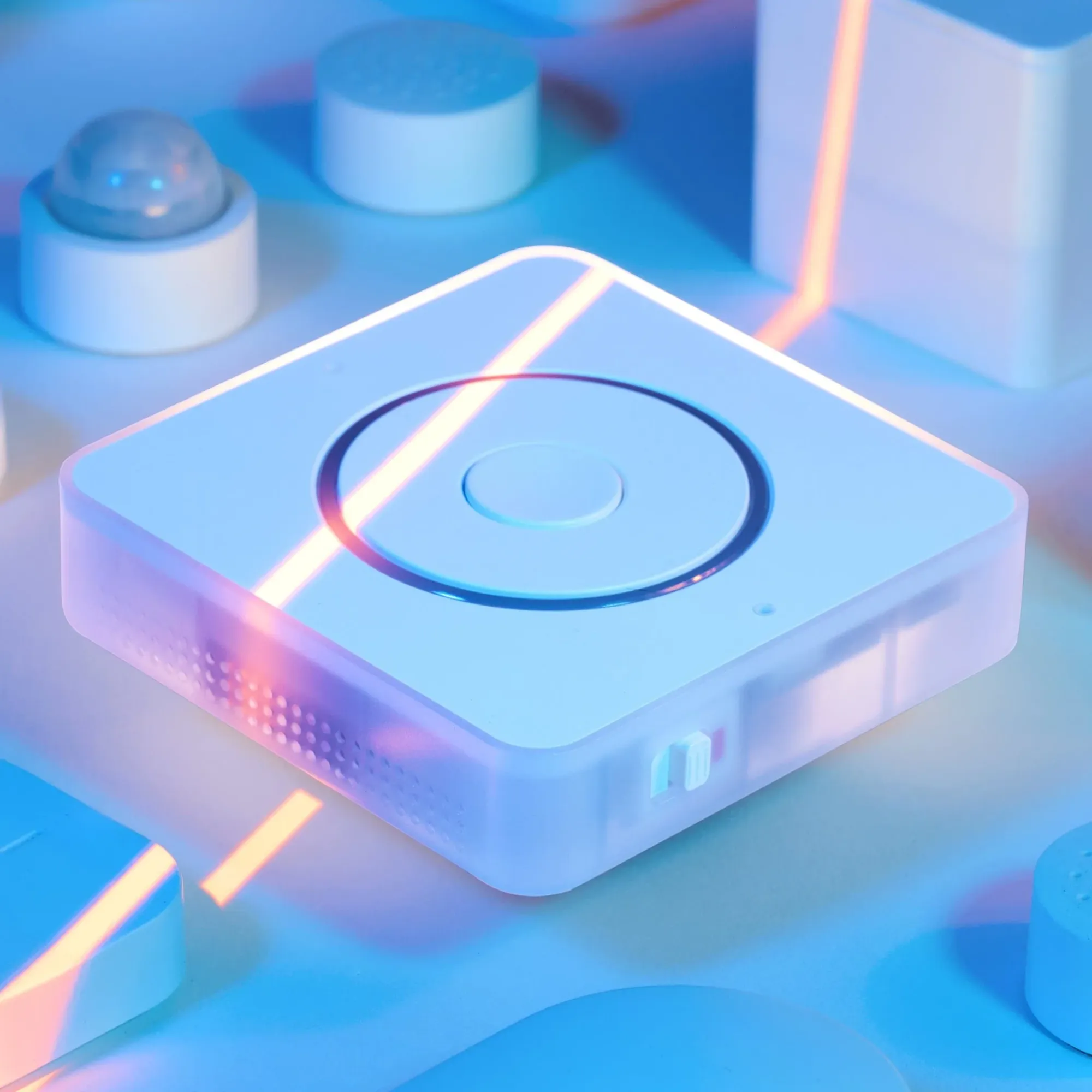
Back in October of 2011 Apple introduced Siri. It's 2025 and there is still no support for my native language, Greek, on any voice assistant platform. Should I wait any longer ?
It's pretty clear by now that no major company is considering to support my native language, so I had to take matters in my own hands. Thanks to Home Assistant and the Home Assistant Voice hardware I've completed my journey of bringing voice commands to my home.
A couple of years ago I installed the linuxserver flavored Docker image of Home Assistant and a few months later the team at Nabu Casa announced their "Year of the Voice" initiative. They set out to improve local voice recognition and they managed to conquer all the goals. During that year they developed a fully working voice system that could utilize local edge-device wake word recognition on low-end hardware (a major breakthrough), speech to text with the help of Whisper and text to speech with Piper. Finally at the beginning of 2025 they released the aforementioned 'Voice Preview Edition' that I ordered on day 1 and received a few weeks later. 'Voice PE' is an ESP32-S3 based piece of hardware with an extra audio processing chip, 2 microphones, a small speaker and most importantly a 3.5mm headphone jack. Once I received mine I plugged it into a Sony SRS-SG300 I bargain bought this past summer.
The day I discovered that Greek was supported by Whisper and Piper I started experimenting with local voice. It was all fine and dandy, except the fact that I use power frugal hardware and the process felt slow and sometimes noisy (fans spinning). That's where the Nabu Casa subscription came in, that not only helps in the advancement of Home Assistant with monetary support but it also gives you access to Nabu Casa Cloud with top notch online speech recognition and text to speech agents in a wide variety of languages. I primarily wanted to support Nabu Casa and didn't consider using the cloud service. After trying it for a few minutes I switched and never looked back.
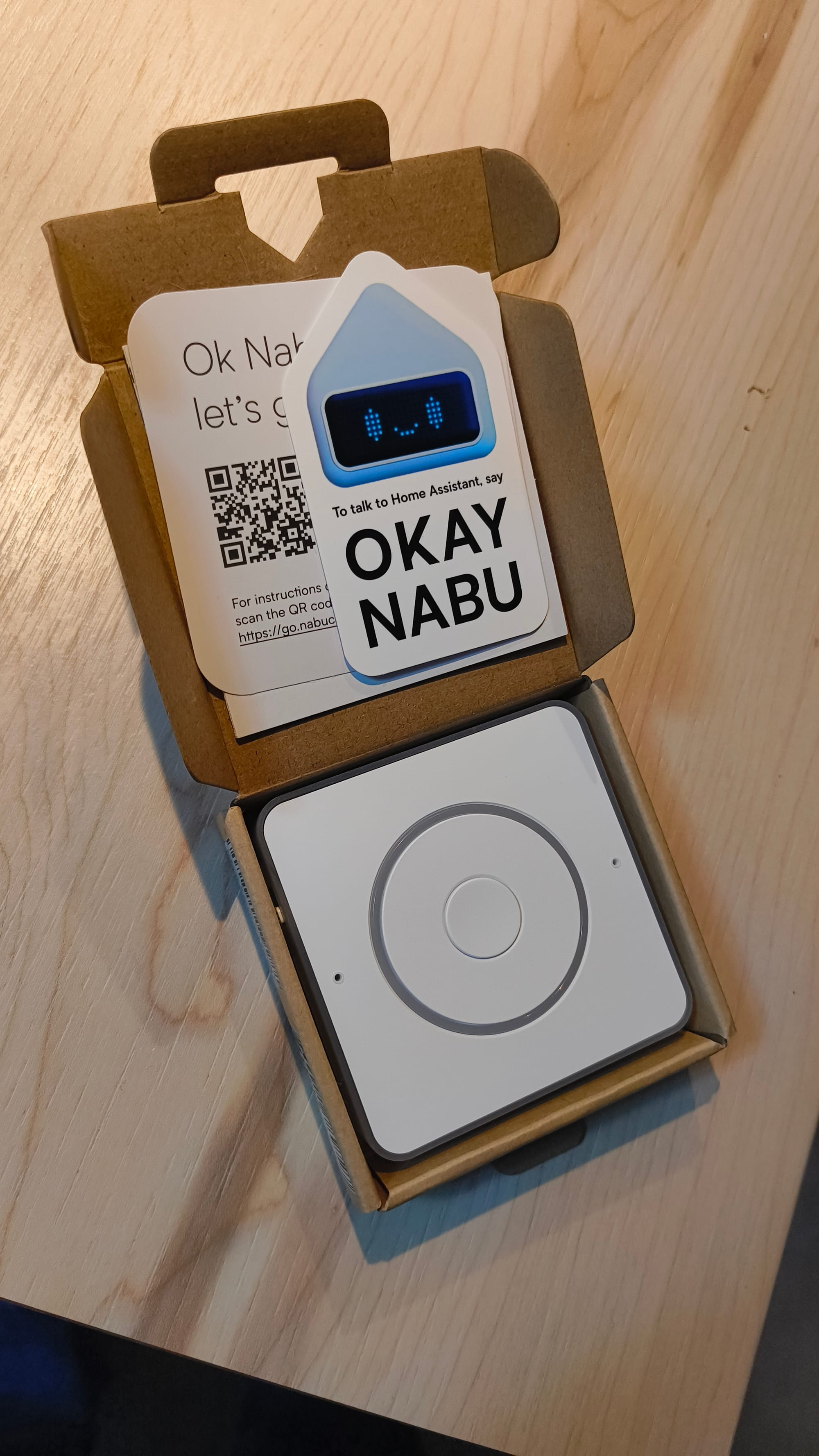
Home Assistant uses a sentence recognizing system called intents which is a predefined set of trigger sentences, that get translated to other languages by volunteers once the English sentences are established. The Greek translation of these 'intents' is somewhat lagging but you are welcome to create your own sentences for recognition inside "Automations" where you can give a series of trigger sentences and the action that should follow accordingly.
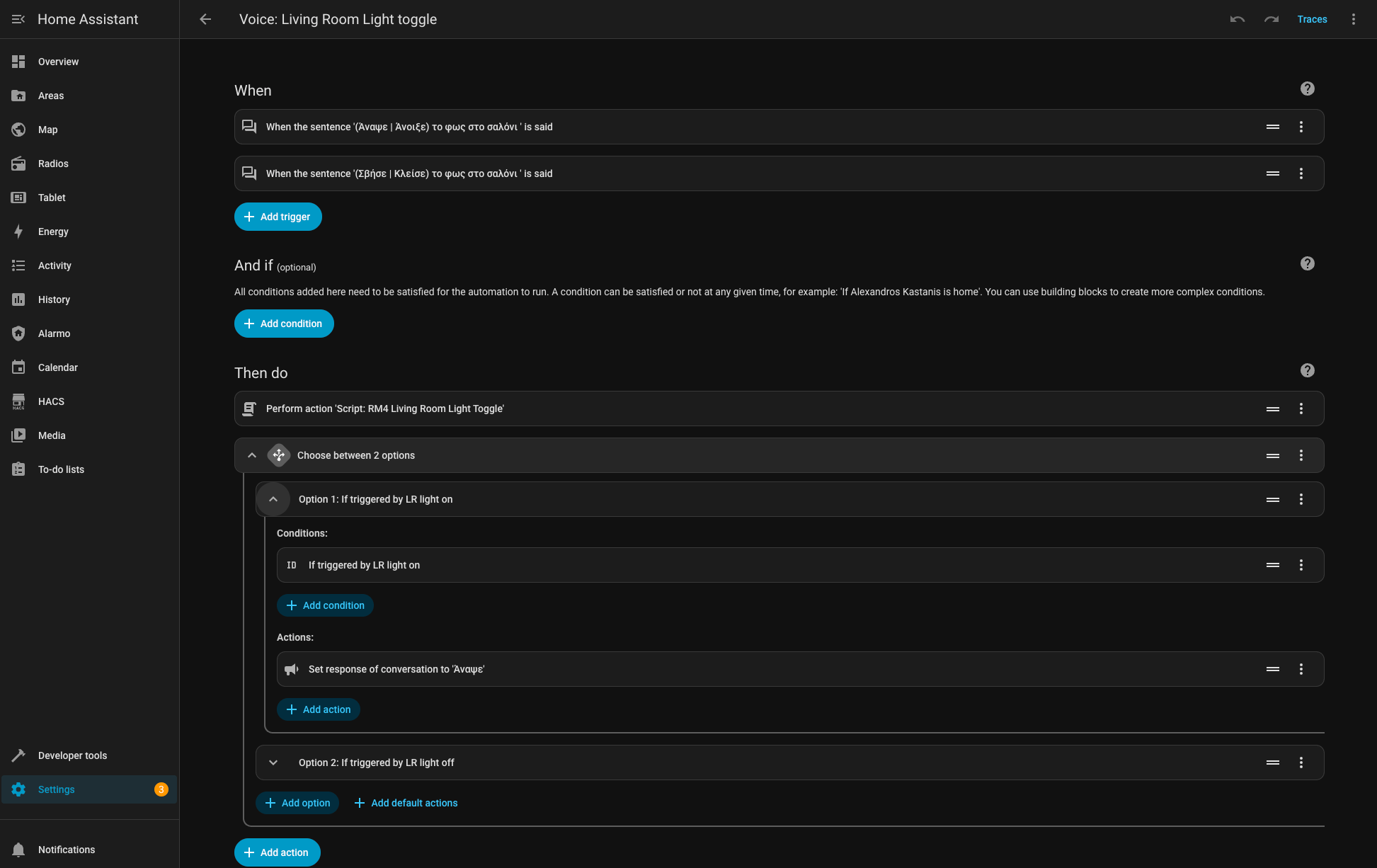
I tend to be very organized, especially with my Home Assistant installation. I've given Greek aliases to all the 'Areas' in my house, I've also given Greek aliases to all the devices I use with voice commands thus establishing a great foundation for community translated intent commands to work. Parallel to this I've created an extensive set of custom commands that toggle the dumb living room fan lights, beam my wife's favorite radio station to the Voice connected speaker etc.
The folks at Nabu Casa have also taken under their wing a complementary piece of software called Music Assistant that takes all your music sources, be it local .flac library, Spotify, YouTube Music and others and make them available to all the WiFi speakers and assistants you have around the house. It's a DIY Sonos with the hardware you have available. I've recently ripped my 400 CD collection for one last time, in lossless FLAC, and Music Assistant is my music central hub now.